Whole-Home Surge Protection in Fort Worth, TX


25+ Years of Experience


Proudly
Est. in 2012


Financing
Available


Dedicated to
Your Comfort

Contact Us to Schedule

Whole-Home Surge Protection for Fort Worth Homes

A whole-home surge protector installs at your electrical panel and stops large voltage spikes before they reach the equipment plugged into your home. Breeze Air, Heat & Electrical Services installs whole-home surge protection across Fort Worth and the northeast Tarrant mid-cities. We have been a licensed electrical contractor (TECL34012) since 2012, and because we also hold the HVAC license (TACLA42955E), we understand exactly what a surge does to the electronic control boards inside the heating and cooling equipment we service.

North Texas gets its share of storms, and storms bring surges. A nearby lightning strike, a downed line, or the utility restoring power after an outage can all push a spike of voltage onto the wires feeding your house. Modern homes are full of electronics that do not tolerate that well: the circuit board in your furnace and air handler, the controls in your air conditioner, your refrigerator, your TVs, your computers, and the chargers and smart devices in every room. A whole-home surge protector is the layer that catches the big spikes at the panel, before they ever reach those devices.

Whole-Home vs. Power-Strip Surge Protectors

Many homeowners rely on power-strip surge protectors at the outlet, and those have a place. But a power strip only protects the few things plugged into it, and it is built to clamp smaller, everyday spikes, not the large surge that arrives from outside the house. A whole-home surge protective device (SPD) installs at your home's electrical entry point, so it stands between the entire house and the surges that come in on the utility line. It covers everything the panel feeds, including the hardwired equipment a power strip can never reach.


How a Panel-Mounted SPD Works

An electrical surge is a brief, sharp rise in voltage well above the normal level your home runs on. A whole-home SPD is wired into your service panel and watches the incoming voltage. When a spike arrives, the device reacts in a fraction of a second, diverting the excess energy safely to ground and away from your branch circuits and the devices on them. Once the spike passes, normal power flow continues uninterrupted. Because it works at the panel, it acts on the surge before that energy ever reaches the outlets and hardwired equipment downstream.

Contact Us


Want financing but don’t know where to start?
Our team can help you find options that work for you.
Contact Us for Financing

Reviews From Our Customers

For over 25 years, Breeze Air, Heat & Electrical has been a trusted name throughout our community. From the very beginning, our mission has been simple: deliver honest, dependable service backed by skilled technicians who treat your home like their own. That commitment has earned us the loyalty of countless local families and businesses who count on us to keep them comfortable and safe year-round.

But you don’t have to take our word for it — see what your neighbors have to say. The reviews you’ll find here reflect the quality, care, and professionalism we bring to every job, big or small.

Why Fort Worth Homes Need Surge Protection

Surges are not rare events that only happen during a direct lightning strike. The largest spikes do come from storms and lightning, and North Texas sees plenty of both, but surges also arrive from the grid itself. When the utility switches loads, when power is restored after an outage, or when a transformer on your street acts up, a spike can travel down the line and into your panel. Even inside the home, large appliances cycling on and off send smaller surges through the wiring. Over time, those repeated hits wear on sensitive electronics.

What makes this more pressing than it used to be is how much of a modern home runs on circuit boards. A furnace, an air handler, and a high-efficiency air conditioner all carry electronic controls that a single bad surge can ruin. So do appliances, entertainment systems, and the growing list of smart devices in the house. Replacing any one of those after a surge costs far more than protecting all of them at once, which is the case for catching the spike at the panel.

What a Whole-Home SPD Protects

A panel-mounted SPD protects everything the electrical panel feeds, which is most of what a surge can damage:

  • HVAC control boards. The circuit boards and controls in your furnace, air handler, and air conditioner are among the most surge-sensitive and most expensive parts in the house.
  • Major appliances. Refrigerators, ovens, washers, and dryers increasingly run on electronic controls rather than simple mechanical switches.
  • Electronics. Televisions, computers, networking gear, and home theater equipment.
  • Everyday devices. Chargers, smart thermostats, security cameras, and the other small electronics that stay plugged in continuously.

Layered Protection: Panel Plus Point-of-Use

The strongest approach is layered. A whole-home SPD at the panel is the first and largest layer; it takes the brunt of the big surges coming in from outside. Point-of-use protectors, the power strips and outlet protectors at your most sensitive equipment, are the second layer, catching the smaller residual spikes that get past the first stage or originate inside the home. The panel device does the heavy lifting; the point-of-use devices add a final buffer right at the equipment you care about most. Together they cover both the large external surges and the smaller internal ones.

The Installation

A whole-home surge protector is wired directly into your electrical panel, which is why it is work for a licensed electrician and not a do-it-yourself project. Installing it means opening the service panel and connecting the device to your home's main electrical supply, where the conductors carry full service voltage. Done correctly it is a clean, contained job. Done without the right training it is a serious shock and fire hazard. Here is how a typical install runs:

  1. Panel assessment. We look at your existing service panel, confirm its condition, and check that it has room for the device and is in shape to support it.
  2. Device selection. We size and select an SPD appropriate for a whole-home install and your panel.
  3. Installation at the panel. A licensed electrician mounts the SPD and wires it into the panel, connecting it to the main supply and grounding it properly so it can divert a surge to ground.
  4. Test and walkthrough. We verify the device is installed and indicating correctly, then show you what its status indicator means so you know it is doing its job.

If your assessment turns up an older or undersized panel, surge protection is a natural time to address it. Because Breeze also handles electrical panel replacement, the same licensed electrician can upgrade the panel and add the SPD as one planned project rather than two separate trips. It is the same reason homeowners often add surge protection when we install an EV charger or other major circuit, since the electrician is already working at the panel.

What Drives the Cost

The cost of a whole-home surge protector install depends on your home, so we quote it after we see the panel rather than over the phone. The main factors are the surge device itself and its rating, the condition and capacity of your existing panel, whether the panel has room and proper grounding or needs work first, and the permit the jurisdiction requires. We give you a written, itemized estimate up front, with no surprise charges added afterward.

Why Use a Licensed Electrician

Surge protection only works if it is installed correctly, grounded correctly, and matched to the panel it protects. That is electrical work at the service panel, and in Fort Worth it is the kind of work a licensed electrician should perform. Breeze installs the SPD to code, grounds it properly so it can actually divert a surge, and stands behind the work as the same dual-licensed contractor that services your heating and cooling equipment.

Why Choose Breeze for Surge Protection

  • Licensed Electrical Work
    A whole-home SPD is wired into the service panel and installed by a licensed electrician (TECL34012), grounded and connected to code.
  • Whole-Home Coverage
    Protection at the panel covers everything the panel feeds, including the hardwired HVAC equipment a power strip cannot reach.
  • Layered Approach
    A panel SPD plus point-of-use protectors covers both the large surges from outside and the smaller ones inside the home.
  • One Contractor, Both Trades
    The same dual-licensed company that services your HVAC equipment protects the electronics that run it.

A Local Electrical Contractor

We are an independent, locally run contractor based in Fort Worth and serving the surrounding mid-cities since 2012. You deal with the same team that does the work, and we hold both the electrical (TECL34012) and HVAC (TACLA42955E) licenses.

Surge Protection FAQs

  • What is whole-home surge protection? It is a surge protective device (SPD) wired into your electrical panel that catches large voltage spikes before they reach the circuits and equipment in your home. Because it works at the panel, it protects everything the panel feeds, including hardwired equipment like your HVAC system that a plug-in power strip cannot reach.
  • Do I still need power-strip surge protectors? They help as a second layer. A whole-home SPD at the panel handles the large surges that come in from outside, and point-of-use protectors at your most sensitive electronics catch the smaller spikes that get past it or originate inside the home. The two layers work together.
  • Will it protect my HVAC system? Yes. The control boards in a furnace, air handler, and air conditioner are among the most surge-sensitive and expensive parts in a home, and they are hardwired, so a panel SPD is the practical way to protect them. As a dual-licensed HVAC and electrical contractor, that overlap is exactly why we install these.
  • Can I install a surge protector myself? A whole-home SPD wires directly into the service panel, where the conductors carry full service voltage. That makes it work for a licensed electrician, not a do-it-yourself project, because of the shock and fire risk and the need to ground and connect it correctly.
  • What causes electrical surges? The largest come from lightning and storms, which North Texas sees regularly, but surges also come from the grid when the utility switches loads or restores power after an outage, and from large appliances cycling on and off inside the home.
  • What are your hours? We are open Monday through Friday 8am to 5pm and Saturday and Sunday 8am to 7pm.

Schedule Your Surge Protection Install

To protect your home's electronics and HVAC equipment from the next storm or grid surge, contact us to schedule an assessment and we will look at your panel and follow up to get you on the calendar.

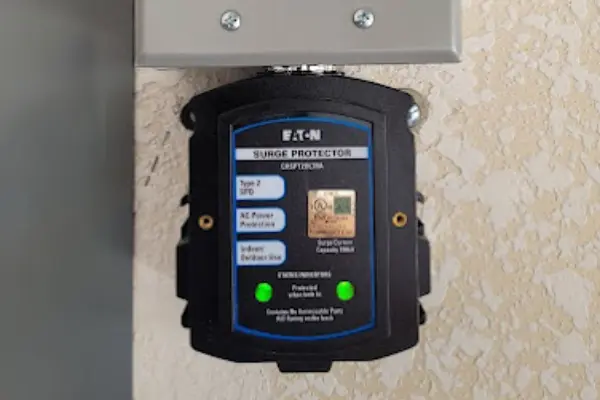
Whole-home surge protection from Breeze Air, Heat & Electrical in Fort Worth, TX
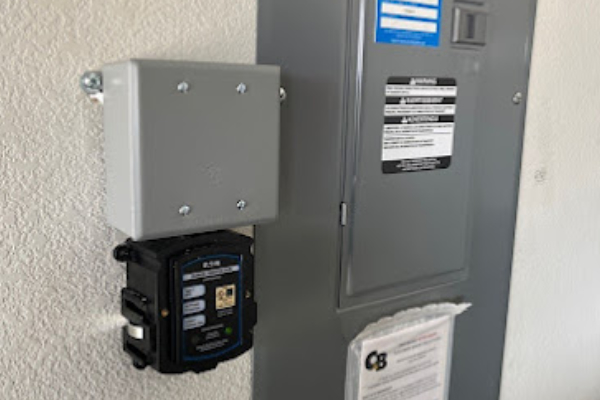
Panel-mounted surge protective device installed by Breeze Air, Heat & Electrical
Electrical panel where a whole-home surge protector is installed in Fort Worth, TX

Our Featured Rebates & Specials

We’re happy to offer rebates and specials to help you save on our services and products.

Oncor rebates for your next HVAC installation

Your Oncor Rebate Provider

As a trusted Oncor service provider, we’re authorized to provide you rebates for your system upgrades. Oncor provides rebates and incentives including:

  • Incentives ranging from $300 up to $2,800
  • Incentives for low-income household upgrades
  • Discounts as high as $500 on smart products such as smart thermostats
Contact Us to Apply

$649
SURGE PROTECTOR SPECIAL
Whole Home Surge Protector & Electrical Panel Maintenance

Contact Us

Expires On: 07/01/2026

$129 Tune-Up
FOR EACH SYSTEM
Spring/Summer
AC TUNE UP SPECIAL

Contact Us

Expires On: 07/01/2026

Up to
$999 OFF
Lennox System Install

Contact Us

$75 OFF
Duct Cleaning Special

Contact Us

Expires On: 07/01/2026

About Us  |  ©Red Barn Media Group 2026